


Photo: Illustrative
Brooklyn Man Gets 12 Years in Prison for $16 Million Crypto Phishing Scam
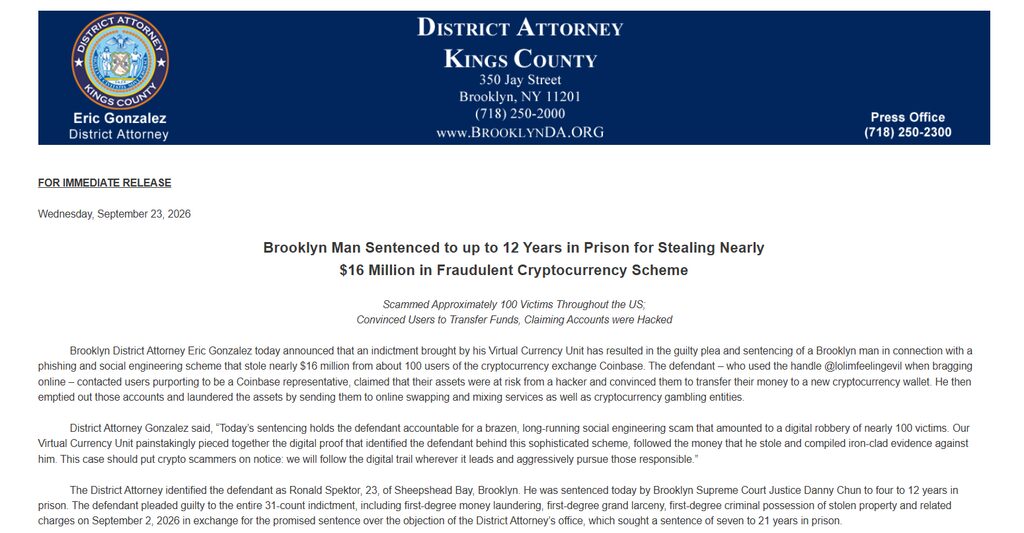
Ronald Spektor, 23, of Brooklyn, faces up to 12 years in prison after admitting he stole nearly $16 million from almost 100 Coinbase users across the United States. New York District Attorney Eric Gonzalez announced the sentence on Wednesday.
.jpeg)
Ronald Spektor, 23, of Brooklyn, faces up to 12 years in prison after admitting he stole nearly $16 million from almost 100 Coinbase users across the United States. New York District Attorney Eric Gonzalez announced the sentence on Wednesday.
How the Social Engineering Scheme Worked
For more than a year, Spektor posed as a customer service agent and told victims their accounts had been hacked, then pushed them to move funds into wallets he controlled. He laundered the money by swapping it across several exchanges, gathering it at cash-out points, converting it into other coins and placing bets. He then turned it into cash for gift cards or more digital assets.
Forfeiture and Restitution
Spektor must forfeit cash, crypto and property worth over half a million dollars and repay almost $16 million. Gonzalez said the Virtual Currency Unit traced the money and built an airtight case.
Rising Crypto Fraud Trends
WhiteBIT found that about 41% of crypto security incidents in 2025 involved tricking victims. Earlier this month, a 22-year-old Singaporean pleaded guilty to leading a network that took $245 million, mostly through social engineering. Chainalysis also reports criminals now target individuals more than infrastructure.
Gonzalez warned that Coinbase and most companies never call customers or ask them to move crypto to a “safe wallet.” Caller ID, sender names and lookalike domains can all be faked, and scammers rely on pressure, so never move money in a rush.
Live market reaction
Disclaimer
This content is for informational purposes only and does not constitute financial, investment, or legal advice. Cryptocurrency trading involves risk and may result in financial loss.
Start trading
with BloFin today
Up to $500 sign-up bonus and zero-fee trading on your first 30 days.
Buy crypto nowⓘ You will be redirected to BloFin
About the author
Emerging voice in crypto journalism with a background in fintech and digital economics. Covers DeFi, NFTs, and the evolving regulatory landscape.

 Tristan R. ·