


Photo: Illustrative
Cambridge Study Shows Ethereum Among the Most Energy-Efficient Proof-of-Stake Networks
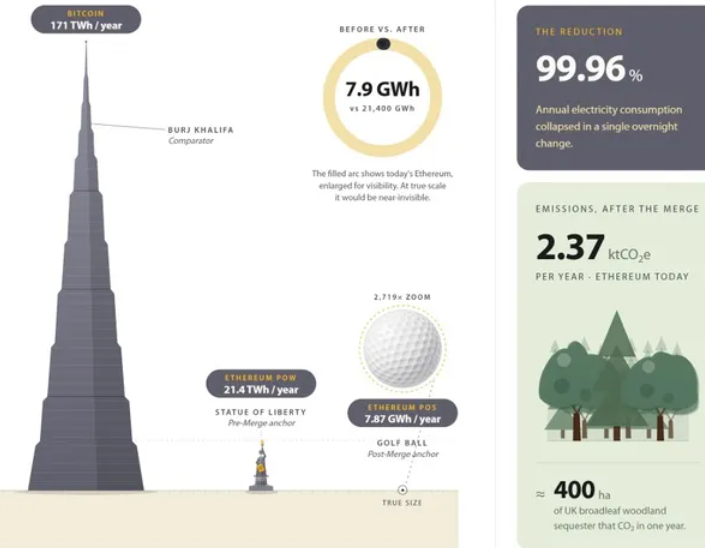
A new report from the Cambridge Centre for Alternative Finance has shed light on how much electricity Ethereum actually consumes since shifting away from mining. According to the study, Ethereum uses close to 7.87 gigawatt-hours of electricity each year, placing it near the bottom in terms of energy intensity among the proof-of-stake networks examined.
.jpeg)
A new report from the Cambridge Centre for Alternative Finance has shed light on how much electricity Ethereum actually consumes since shifting away from mining. According to the study, Ethereum uses close to 7.87 gigawatt-hours of electricity each year, placing it near the bottom in terms of energy intensity among the proof-of-stake networks examined.
How Ethereum Compares to Other Networks
When researchers adjusted energy use against market value, Ethereum came out using about 33 kilowatt-hours per million dollars of value, the second-best efficiency score in the study, trailing only BNB Chain. Solana, by contrast, consumed the most power of any network reviewed, burning through roughly 13.48 gigawatt-hours yearly. Its efficiency score worked out to about 283 kilowatt-hours per million dollars, making it nearly nine times less efficient than Ethereum. Combined, all networks in the comparison used close to 38 gigawatt-hours.
Where the Power Comes From
Cambridge looked closely at Ethereum’s node infrastructure to build its estimates. Home setups running the network typically drew around 18 watts, while high-performance workstations consumed closer to 153 watts. Averaging across roughly 8,500 discoverable full nodes, about 64% hosted in cloud or enterprise environments and the rest on residential connections, researchers calculated an average draw near 105 watts per node.
The study found that more than half of Ethereum’s electricity, about 56.4%, now comes from renewable or nuclear sources, with the remainder from fossil fuels.
The Merge’s Lasting Impact
Ethereum’s efficiency gains trace back to September 2022, when the network completed its shift from energy-heavy mining to staking-based validation through an upgrade known as the Merge. That change is credited with cutting the network’s electricity consumption by more than 99.9%.
Live market reaction
Disclaimer
This content is for informational purposes only and does not constitute financial, investment, or legal advice. Cryptocurrency trading involves risk and may result in financial loss.
Start trading
with BloFin today
Up to $500 sign-up bonus and zero-fee trading on your first 30 days.
Buy crypto nowⓘ You will be redirected to BloFin
About the author
Emerging voice in crypto journalism with a background in fintech and digital economics. Covers DeFi, NFTs, and the evolving regulatory landscape.

 Tristan R. ·

.jpeg&w=32&q=75) Laurisa ·
Laurisa ·