

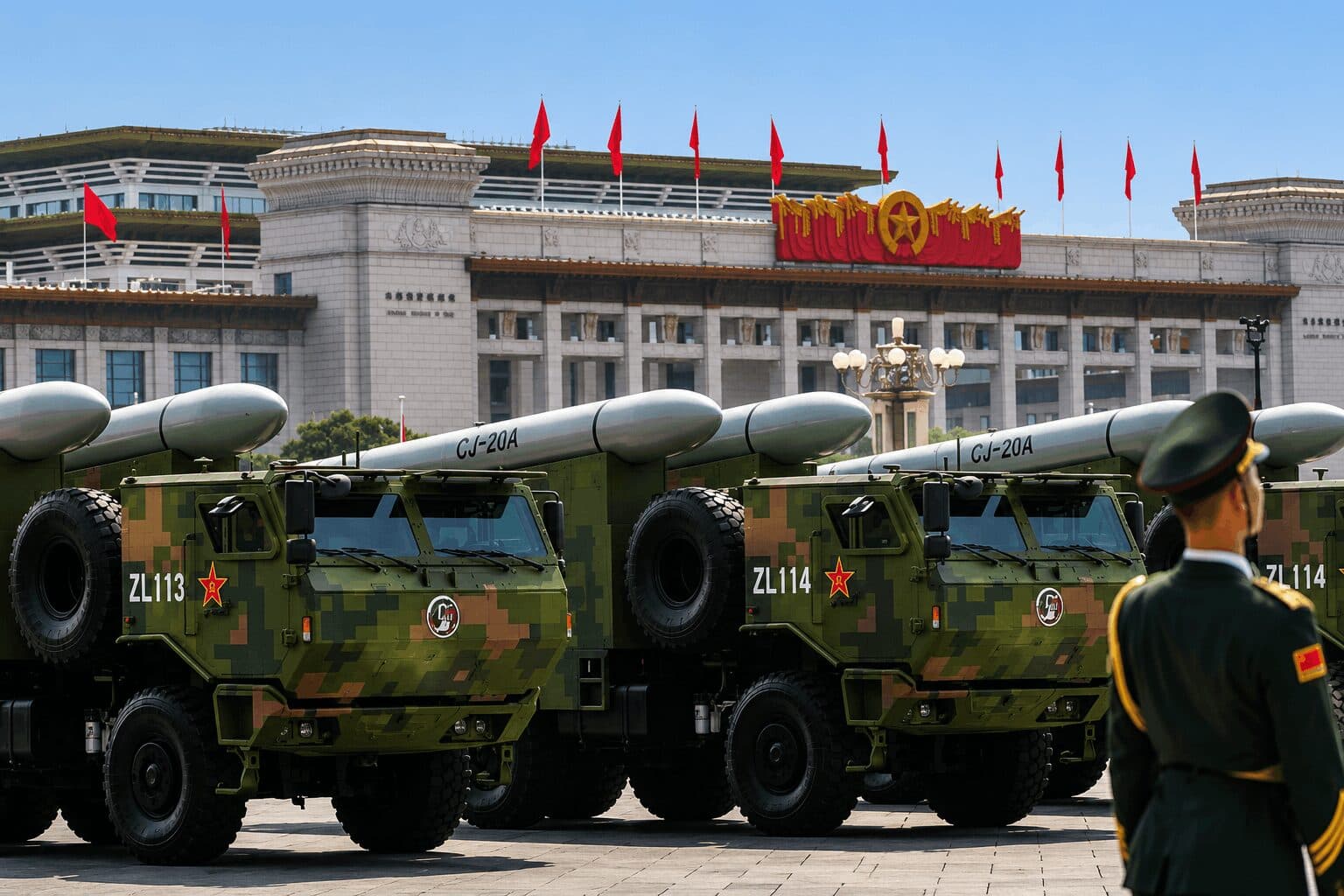
Photo: Illustrative
Chinese Military Researchers Used US AI Models to Train Defence Systems, Report Finds
Chinese military researchers have used outputs from leading US artificial intelligence models built by OpenAI and Anthropic to train domestic systems aimed at strengthening China's defence capabilities, according to a Reuters review of more than 80 Chinese academic papers and patents.
.jpeg)
Chinese military researchers have used outputs from leading US artificial intelligence models built by OpenAI and Anthropic to train domestic systems aimed at strengthening China’s defence capabilities, according to a Reuters review of more than 80 Chinese academic papers and patents.
Distillation Technique at the Center of the Findings
The documents point to widespread use of “model distillation,” a method where outputs from a powerful AI system train smaller, specialized models that can run locally without the massive computing power needed to build frontier AI from the ground up. The review, which included research shared by the Washington-based Jamestown Foundation, found the technique used extensively by researchers tied to the People’s Liberation Army and other military institutions.
From Cyber Warfare to Drone Targeting
One paper from PLA Unit 96941, a military intelligence and cyber-warfare unit, described using OpenAI’s GPT-3.5 to summarize sensitive military source code for training a domestic model that operates entirely within Chinese military networks. At the North University of China, researchers used Anthropic’s Claude 3 Haiku to generate training data for social media monitoring. Other studies described distillation used to shrink image-processing models for drone navigation and targeting, as well as for target-recognition systems tested in simulated maritime operations.
Dispute Centers on Unauthorized Extraction
Anthropic said it does not offer commercial access to Claude in China or to Beijing-controlled firms and warned that distilled models can lose original safety safeguards. US officials have accused certain Chinese entities of using distillation to extract capabilities from American models, potentially breaching export controls and intellectual property rights, an accusation China has rejected. Experts noted distillation has clear limits, since distilled models inherit only selected capabilities and cannot fully match the broader intelligence of the original frontier systems.
Live market reaction
Disclaimer
This content is for informational purposes only and does not constitute financial, investment, or legal advice. Cryptocurrency trading involves risk and may result in financial loss.
Start trading
with BloFin today
Up to $500 sign-up bonus and zero-fee trading on your first 30 days.
Buy crypto nowⓘ You will be redirected to BloFin
About the author
Emerging voice in crypto journalism with a background in fintech and digital economics. Covers DeFi, NFTs, and the evolving regulatory landscape.
South Korean Investors Renew Push To Delay Crypto Tax As Officials Hold Firm
 Tristan R. ·
Canada’s Prime Minister Pitches Global Investors on $721 Billion Growth Plan Amid U.S. Trade Tensions
Tristan R. · 
DeFi Development Corp Grows Solana Treasury to 2.39 Million SOL, Launches $300 Million CHAD ATM
Tristan R. ·