


Photo: Illustrative
IBIT Options Signal Calmer Bitcoin Trading After Recent Rebound
Options on BlackRock's iShares Bitcoin Trust (IBIT) are pricing in smaller price swings than the fund actually experienced during Bitcoin's recent rebound, according to Saxo Bank. IBIT's implied volatility stood at 37.4%, compared with realized volatility of 45.5% over the 20 trading sessions through Tuesday, Saxo investment and options strategist Koen Hoorelbeke wrote Thursday.
.jpeg)
Options on BlackRock’s iShares Bitcoin Trust (IBIT) are pricing in smaller price swings than the fund actually experienced during Bitcoin’s recent rebound, according to Saxo Bank. IBIT’s implied volatility stood at 37.4%, compared with realized volatility of 45.5% over the 20 trading sessions through Tuesday, Saxo investment and options strategist Koen Hoorelbeke wrote Thursday.
What the Volatility Gap Suggests
Based on Wednesday’s data, Hoorelbeke put IBIT’s implied volatility rank at 11.9, placing it near the bottom of its 12-month range. He said the options market appears to be pricing calmer conditions than what the recent past actually produced. Implied volatility reflects expectations of future price swings built into options prices, while realized volatility measures how much the price has actually moved.
Key Bitcoin Price Levels to Watch
Hoorelbeke pointed to resistance around $87,000, where Bitcoin’s advance stalled on Sept. 21, and support between $76,000 and $77,000. Bitcoin traded at $84,101 at the time of writing, up 1.6% over the previous 24 hours.
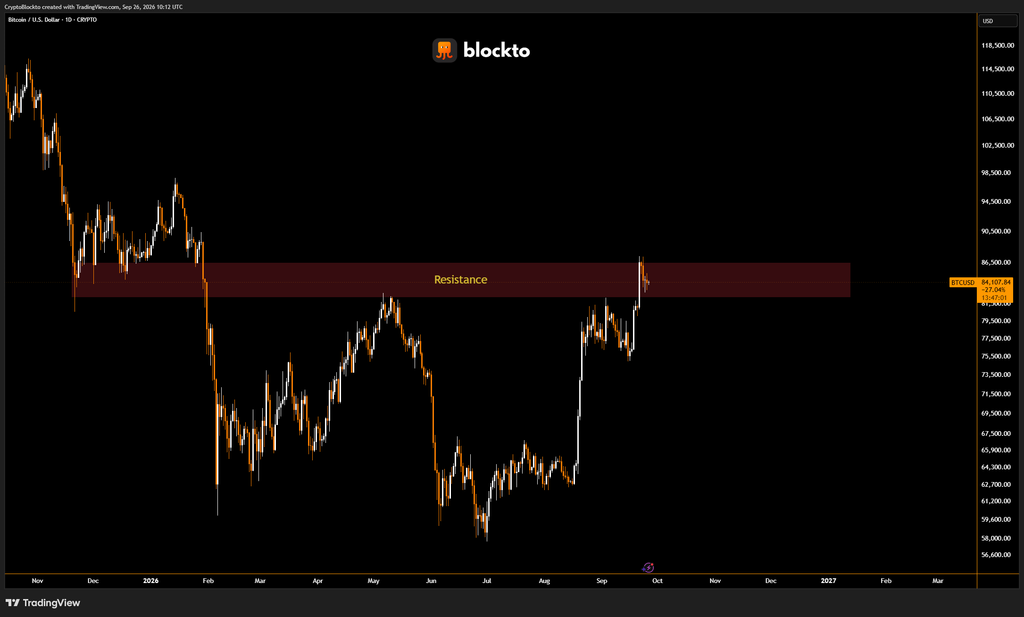
Live market reaction
Disclaimer
This content is for informational purposes only and does not constitute financial, investment, or legal advice. Cryptocurrency trading involves risk and may result in financial loss.
Start trading
with BloFin today
Up to $500 sign-up bonus and zero-fee trading on your first 30 days.
Buy crypto nowⓘ You will be redirected to BloFin
About the author
Emerging voice in crypto journalism with a background in fintech and digital economics. Covers DeFi, NFTs, and the evolving regulatory landscape.
.jpeg&w=32&q=75) Laurisa ·
Laurisa · 
 Tristan R. ·