

Photo: Illustrative
Illinois Releases Draft Rules for Its 0.2% Crypto Transaction Tax
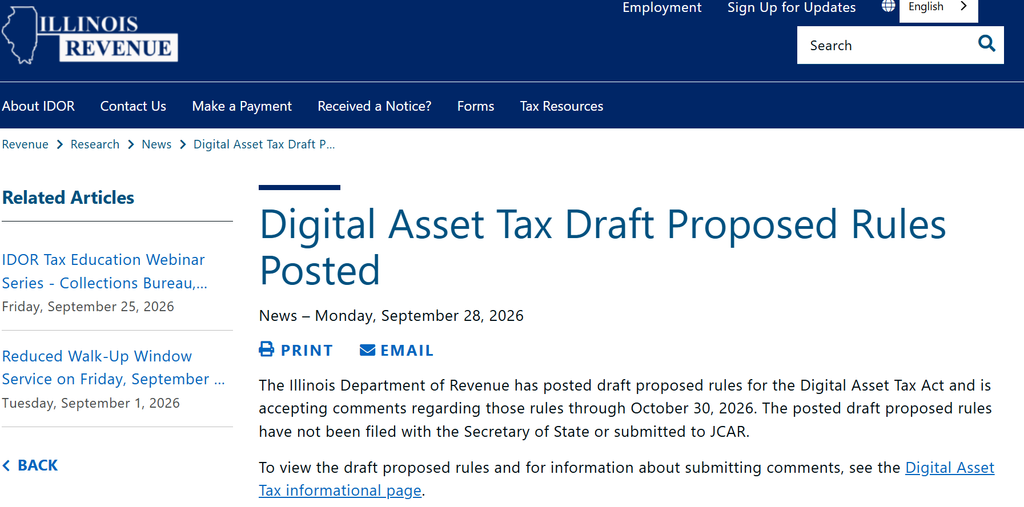
Illinois tax officials have published draft rules explaining how the state's newly enacted digital asset transaction tax will apply to stablecoins, DeFi platforms and other crypto activity ahead of its 2027 start date.

Illinois tax officials have published draft rules explaining how the state’s newly enacted digital asset transaction tax will apply to stablecoins, DeFi platforms and other crypto activity ahead of its 2027 start date.
What Counts as Taxable Under Illinois’ Crypto Tax
The draft rules classify stablecoins as taxable digital assets, while nonfungible tokens are excluded from the tax entirely. DeFi transactions would generally be exempt unless users pay fees considered “valuable consideration,” such as protocol fees charged for operating or maintaining a platform. Network fees and swap fees paid only to liquidity providers would not trigger the tax.
Crypto Bridging and Self-Custody Transfers
The rules identify crypto bridging as taxable exchange activity when it’s conducted through a digital asset broker for a fee. Transfers from centralized exchanges to self-custody wallets could also be taxed if the exchange charges a fee for the transfer.
Illinois Digital Asset Tax Act Timeline
Illinois approved the Digital Asset Tax Act in June despite pushback from crypto industry groups. The 0.2% tax is scheduled to take effect Jan. 1, 2027. The Illinois Department of Revenue said Monday it is accepting public comments on the draft rules through Oct. 30.
Live market reaction
Disclaimer
This content is for informational purposes only and does not constitute financial, investment, or legal advice. Cryptocurrency trading involves risk and may result in financial loss.
Start trading
with BloFin today
Up to $500 sign-up bonus and zero-fee trading on your first 30 days.
Buy crypto nowⓘ You will be redirected to BloFin
About the author
8+ years covering crypto markets, macro, and geopolitics. Previously at Decrypt and CoinDesk. Focused on the intersection of digital assets and traditional finance.

 Tristan R. ·