

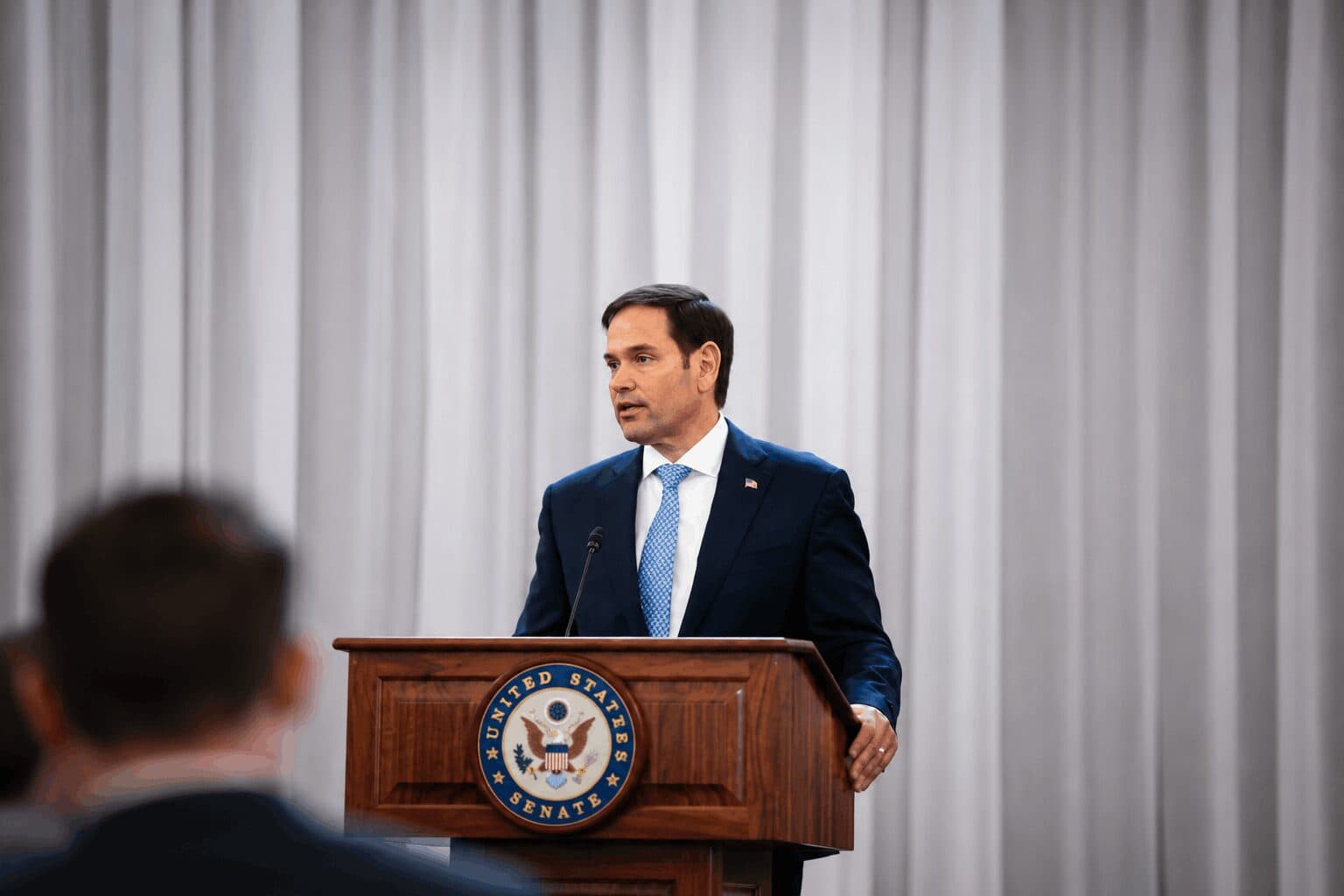
Photo: Illustrative
Marco Rubio Faces Gulf Concerns Over New US-Iran Peace Agreement
US Secretary of State Marco Rubio is facing growing pressure from Gulf Arab allies as he begins meetings across the Middle East to defend Washington’s new agreement with Iran.

US Secretary of State Marco Rubio is facing growing pressure from Gulf Arab allies as he begins meetings across the Middle East to defend Washington’s new agreement with Iran.
Rubio arrived in the United Arab Emirates before scheduled talks Kuwait and Bahrain with members of the Gulf Cooperation Council, which includes Saudi Arabia, Qatar and Oman. The meetings come as several regional governments privately express concern that the new US-Iran understanding could strengthen Tehran’s political and military influence across the region.
Iran Missile Concerns Create Regional Tension
One of the biggest concerns among Gulf leaders is the absence of restrictions on Iran’s ballistic missile program in the draft agreement.
During the recent conflict, the United States repeatedly described Iran’s missile capabilities as a major security threat. Gulf countries remain especially sensitive to the issue because many are within range of Iranian missiles and have previously faced attacks linked to regional tensions.
Regional officials are also worried about a proposed $300 billion reconstruction package that could help Iran rebuild its economy while increasing support for allied groups across the Middle East.
Strait of Hormuz and Oil Security Remain Key Issues
Another major concern for Gulf states involves the Strait of Hormuz, one of the world’s most important oil shipping routes.
Parts of the agreement reportedly suggest Iran could gain a larger role in regional maritime security arrangements, raising fears among Gulf exporters that Tehran may gain greater influence over energy flows and shipping operations.
Saudi Arabia, Kuwait and Qatar all rely heavily on stable oil and gas exports passing through the strait.
Some American officials argue the deal remains temporary and that Washington could quickly return to tougher policies if negotiations collapse. However, Gulf governments continue watching closely for signs that the United States may be moving toward a broader long-term normalization strategy with Iran.
The discussions this week are expected to shape future security cooperation between Washington and its Gulf allies as tensions continue across the region.
Live market reaction
Disclaimer
This content is for informational purposes only and does not constitute financial, investment, or legal advice. Cryptocurrency trading involves risk and may result in financial loss.
Start trading
with BloFin today
Up to $500 sign-up bonus and zero-fee trading on your first 30 days.
Buy crypto nowⓘ You will be redirected to BloFin
About the author
8+ years covering crypto markets, macro, and geopolitics. Previously at Decrypt and CoinDesk. Focused on the intersection of digital assets and traditional finance.
 Tristan R. ·
.jpeg&w=32&q=75) Laurisa ·
Laurisa ·