

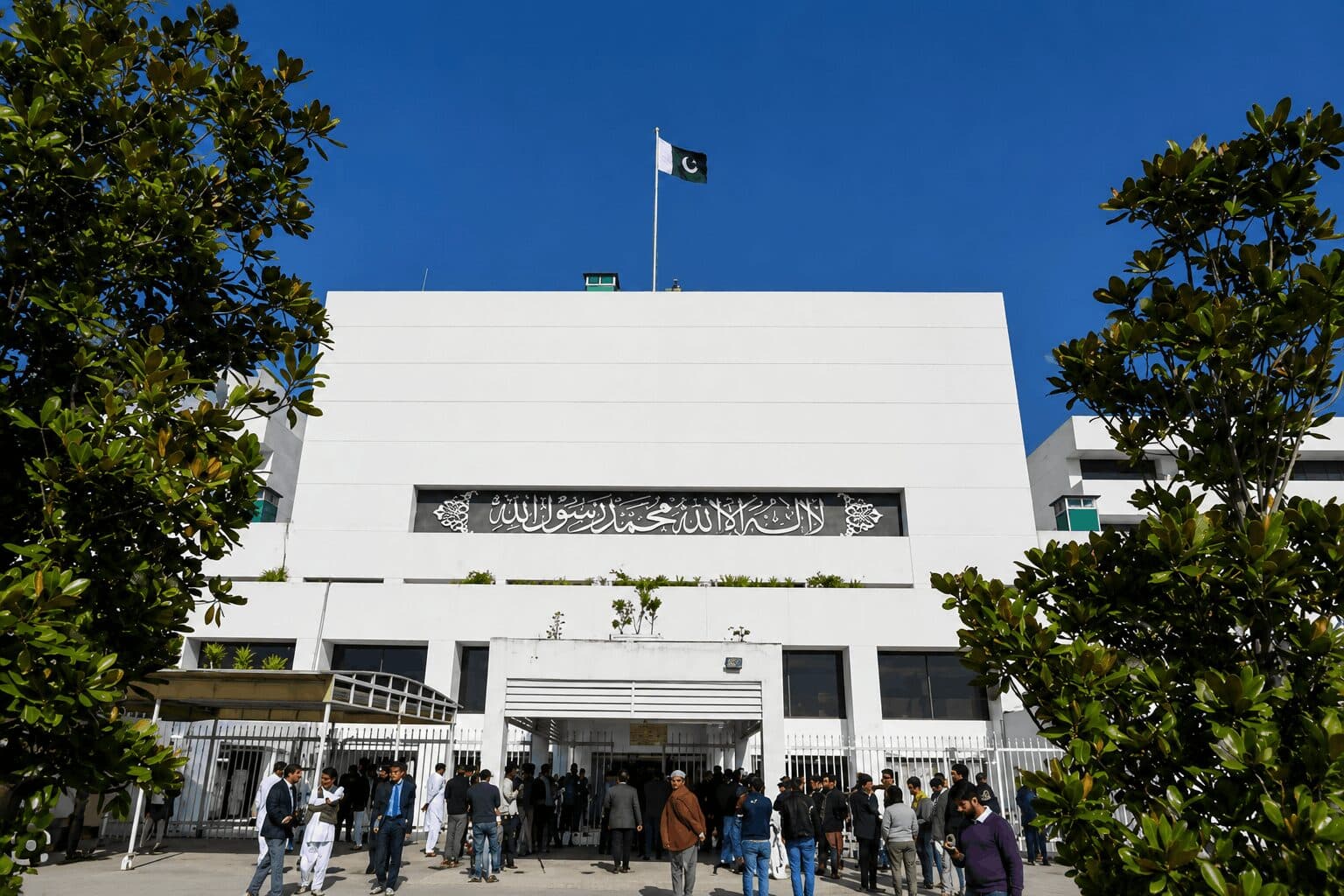
Photo: Illustrative
Pakistan’s Crypto Regulator Seeks Dialogue After Islamic Scholars Rule Against Crypto Payments
The head of Pakistan's Virtual Assets Regulatory Authority, Bilal bin Saqib, has called for continued discussions on how digital assets should be treated under Islamic law. The remarks followed a meeting with Mufti Taqi Usmani, a well-known Islamic scholar who recently supported a religious ruling against making purchases using cryptocurrency.
.jpeg)
The head of Pakistan’s Virtual Assets Regulatory Authority, Bilal bin Saqib, has called for continued discussions on how digital assets should be treated under Islamic law. The remarks followed a meeting with Mufti Taqi Usmani, a well-known Islamic scholar who recently supported a religious ruling against making purchases using cryptocurrency.
What the Meeting Covered
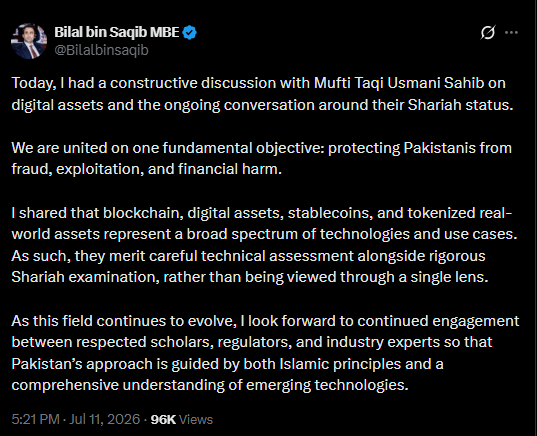
In a social media post shared Saturday, Saqib said the conversation touched on blockchain technology, digital assets, stablecoins, and tokenized real-world assets. He emphasized the importance of protecting Pakistani citizens from fraud and financial exploitation as the country’s crypto sector develops. Saqib noted that different types of digital assets require careful technical evaluation combined with thorough Islamic legal review, rather than being judged as a single category.
According to Pakistani newspaper Dawn, Usmani and five other scholars issued a religious ruling through Jamia Darul Uloom Karachi, a respected Islamic seminary, on Friday. The ruling stated that crypto-based purchases, including stablecoins like USDT, are not permissible because digital tokens do not meet the criteria for recognized property or wealth under their interpretation of Islamic law.
Why This Matters for Pakistan’s Crypto Push
Rather than directly disputing the scholars’ position, Saqib encouraged ongoing dialogue between religious authorities, regulators, and industry stakeholders to clarify distinctions among different digital-asset types. This debate carries significant weight in Pakistan, where the vast majority of the population identifies as Muslim, meaning religious guidance could heavily influence public acceptance of crypto technology.
A Shifting Regulatory Landscape
The discussion comes at a pivotal moment for Pakistan’s digital asset industry. In April, the State Bank of Pakistan allowed licensed virtual asset service providers to open bank accounts, ending an eight-year restriction on regulated institutions engaging with crypto. That decision followed the passage of Pakistan’s Virtual Assets Act earlier this year, which formally established PVARA as the country’s regulatory body overseeing licensing and supervision of virtual asset activities.
Live market reaction
Disclaimer
This content is for informational purposes only and does not constitute financial, investment, or legal advice. Cryptocurrency trading involves risk and may result in financial loss.
Start trading
with BloFin today
Up to $500 sign-up bonus and zero-fee trading on your first 30 days.
Buy crypto nowⓘ You will be redirected to BloFin
About the author
Emerging voice in crypto journalism with a background in fintech and digital economics. Covers DeFi, NFTs, and the evolving regulatory landscape.

 Guylian ·

.jpeg&w=32&q=75) Laurisa ·
Laurisa ·