

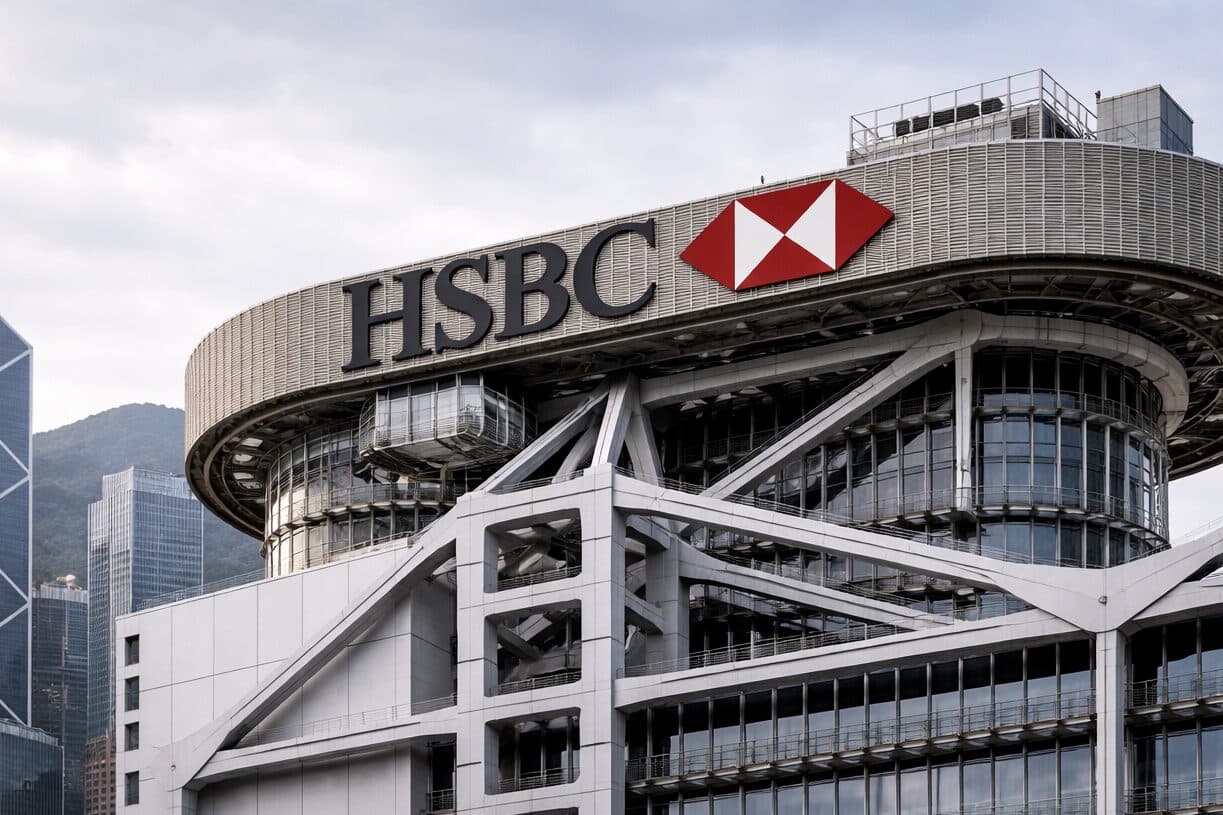
Photo: Illustrative
Standard Chartered and HSBC Complete First Live Transaction on Swift’s Blockchain Ledger
Standard Chartered and HSBC have successfully carried out the first live cross border transaction using Swift's new blockchain-based ledger, showing that their separate tokenized deposit systems can work together. The transaction involved exchanging payment messages through Swift's ledger, with obligations recorded on both HSBC's Tokenised Deposit Service and Standard Chartered's own tokenized deposit system.

Standard Chartered and HSBC have successfully carried out the first live cross border transaction using Swift’s new blockchain-based ledger, showing that their separate tokenized deposit systems can work together. The transaction involved exchanging payment messages through Swift’s ledger, with obligations recorded on both HSBC’s Tokenised Deposit Service and Standard Chartered’s own tokenized deposit system.
How the Ledger Works
Swift’s ledger functioned as a coordination layer, matching and netting the obligations between the two banks before final settlement occurred through existing payment infrastructure. This milestone comes about a month after Swift announced its blockchain ledger was ready for initial use, with 17 banks across six continents preparing to test live transactions using tokenized deposits, including major names like Citi, BNP Paribas, BNY, Wells Fargo, UBS, MUFG, DBS, and ANZ.
Built for Round-the-Clock Cross-Border Payments
The ledger is designed to link tokenized deposits issued on different banks’ internal systems, enabling continuous cross-border payments while preserving existing settlement, compliance, and risk management processes.
Part of a Broader Industry Shift
Banks have been steadily expanding tokenized deposit efforts across borders. HSBC extended its Tokenised Deposit Service to the US in April, following earlier rollouts in Hong Kong, Singapore, the UK, and Luxembourg. Standard Chartered has also taken part in wider testing initiatives, including the Bank for International Settlements’ Project Agorá, which settled roughly $1 million across six currencies using tokenized bank deposits and central bank reserves. Separately, The Clearing House, owned by several major US banks, is reportedly planning its own tokenized deposit network launch in early 2027.
Live market reaction
Disclaimer
This content is for informational purposes only and does not constitute financial, investment, or legal advice. Cryptocurrency trading involves risk and may result in financial loss.
Start trading
with BloFin today
Up to $500 sign-up bonus and zero-fee trading on your first 30 days.
Buy crypto nowⓘ You will be redirected to BloFin
About the author
Covers Bitcoin, on-chain data and market structure. Breaks down what the charts and wallet flows are actually saying, without the hype.

 Guylian ·

.jpeg&w=32&q=75) Laurisa ·
Laurisa ·