

Photo: Illustrative
What Is Ethereum?
Home Introduction to Ethereum Ethereum is a decentralized, open-source blockchain with smart contract functionality. It was proposed in 2013 by programmer Vitalik Buterin and development began in 2014, with the network going live on July 30, 2015. The native cryptocurrency of the Ethereum blockchain is called Ether (ETH). ETH is used to pay for transactions, …
.jpeg)
Introduction to Ethereum
Ethereum is a decentralized, open-source blockchain with smart contract functionality. It was proposed in 2013 by programmer Vitalik Buterin and development began in 2014, with the network going live on July 30, 2015.
The native cryptocurrency of the Ethereum blockchain is called Ether (ETH). ETH is used to pay for transactions, deploy smart contracts, and participate in decentralized finance (DeFi) ecosystems.
The History of Ethereum
-
2013: Ethereum was proposed by Vitalik Buterin.
-
2014: A public crowdsale raised over $18 million.
-
2015: The Ethereum network officially launched.
-
2016: A major hack of The DAO led to a hard fork, splitting Ethereum into Ethereum (ETH) and Ethereum Classic (ETC).
-
2020–2022: Ethereum 2.0 development began, transitioning from Proof-of-Work to Proof-of-Stake.
-
2022: The Merge successfully shifted Ethereum to a Proof-of-Stake consensus.
How Ethereum Works
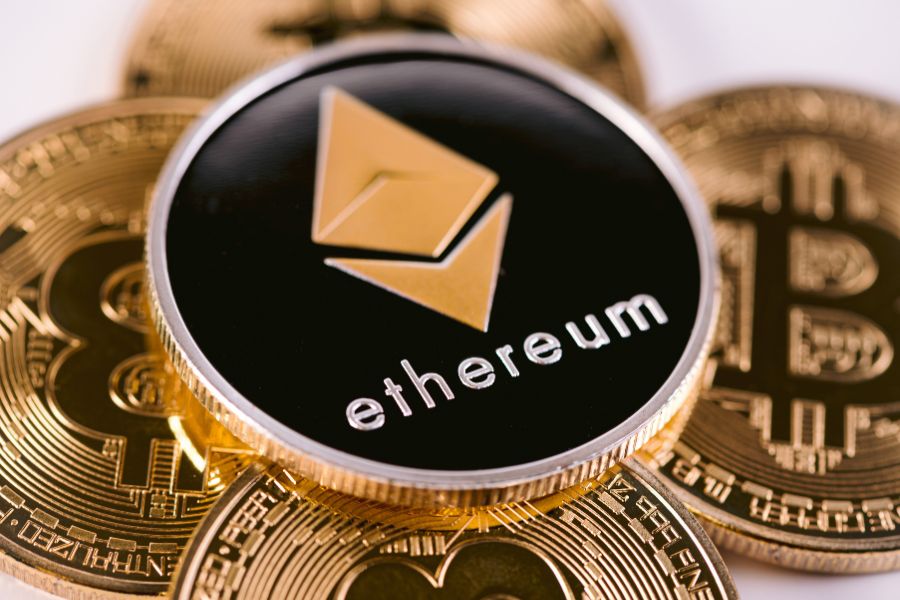
Ethereum operates through a decentralized network of computers (nodes) that validate transactions and maintain a shared ledger. What sets Ethereum apart is its ability to execute smart contracts — self-executing contracts with coded rules and outcomes.
Key Elements:
-
Ether (ETH): The native token used for transactions and smart contract execution.
-
Gas Fees: Users pay gas fees in ETH to perform actions on the network.
-
Ethereum Virtual Machine (EVM): A computation engine that allows developers to run smart contracts.
What Are Smart Contracts?
Smart contracts are programs stored on the Ethereum blockchain that automatically execute when predetermined conditions are met. They remove the need for intermediaries and are essential to decentralized apps (dApps).
Examples:
-
Lending platforms (e.g., Aave)
-
Decentralized exchanges (e.g., Uniswap)
-
NFT marketplaces (e.g., OpenSea)

Ethereum 2.0: The Big Upgrade
Ethereum 2.0, also known as Eth2 or The Merge, refers to a set of upgrades to improve the scalability, security, and sustainability of the Ethereum network.
Key Changes:
-
Proof-of-Stake (PoS): Reduced energy usage by ~99%.
-
Shard Chains (Upcoming): Will increase network capacity.
-
Improved Speed and Fees: More efficient transaction processing.
Ethereum Use Cases
Ethereum’s flexibility has allowed for a wide range of applications:
-
Decentralized Finance (DeFi): Borrowing, lending, and trading without banks.
-
Non-Fungible Tokens (NFTs): Digital art, collectibles, and gaming items.
-
Gaming and Virtual Worlds: Platforms like Decentraland and Axie Infinity.
-
Identity Management: Self-sovereign digital identities.
-
Supply Chain: Transparent and traceable logistics systems.
How to Buy and Store Ethereum
Bitcoin offers several benefits over traditional currencies:
-
Decentralization: Not controlled by any government or financial institution.
-
Low Fees: Especially for international transactions.
-
Security: Cryptographic security and transparency.
-
Accessibility: Anyone with internet access can use it.
-
Limited Supply: Only 21 million bitcoins will ever be created, making it deflationary.
How to Buy and Store Ethereum
Buying Ethereum
You can purchase ETH on nearly every major cryptocurrency exchange:
-
Binance
-
Coinbase
-
Kraken
-
KuCoin
-
Gemini
Storing Ethereum
-
Hot Wallets: Apps or browser extensions like MetaMask, Trust Wallet.
-
Cold Wallets: Hardware wallets like Ledger and Trezor for long-term secure storage.
Advantages of Ethereum
-
Programmability: Supports smart contracts and dApps.
-
Large Developer Community: Thousands of projects built on Ethereum.
-
Widespread Adoption: Used in DeFi, NFTs, and enterprise solutions.
-
Transition to PoS: More energy-efficient and scalable.
Risks and Challenges
-
High Gas Fees: Congestion can lead to expensive transactions.
-
Scalability Issues: Still in progress despite ongoing upgrades.
-
Competition: Newer blockchains like Solana, Cardano, and Avalanche.
-
Regulatory Risks: Uncertain global regulatory environments.
The Future of Ethereum
Ethereum has a strong roadmap for continued growth and evolution:
-
Full Implementation of Sharding: To enhance speed and reduce fees.
-
Mainstream Adoption: More real-world and enterprise use cases.
-
Interoperability: Bridging with other blockchains.
-
Improved Developer Tools: Easier dApp and contract development.
The future of Ethereum is bright, with continued upgrades and a thriving ecosystem that supports innovation in countless sectors.
Conclusion
Ethereum is much more than just a cryptocurrency — it’s a powerful platform enabling a decentralized internet. From smart contracts to decentralized finance, Ethereum has redefined what blockchain technology can achieve.
As with any investment, it’s essential to do thorough research and understand the risks. But if the current trends continue, Ethereum may well remain one of the most influential platforms shaping the future of technology and finance.
Live market reaction
Disclaimer
This content is for informational purposes only and does not constitute financial, investment, or legal advice. Cryptocurrency trading involves risk and may result in financial loss.
Start trading
with BloFin today
Up to $500 sign-up bonus and zero-fee trading on your first 30 days.
Buy crypto nowYou will be redirected to BloFin
About the author
Emerging voice in crypto journalism with a background in fintech and digital economics. Covers DeFi, NFTs, and the evolving regulatory landscape.

 Tristan R. ·

 Laurisa ·