

Photo: Illustrative
Polymarket Users Question Market Resolution After Strategy Bitcoin Sale Contract Settles as ‘No’
A controversial Polymarket has triggered criticism from traders after a contract asking whether Strategy sold Bitcoin by May 31 was officially resolved as “No,” despite later disclosures showing the company had sold Bitcoin during the specified period.
.jpeg)
A controversial Polymarket has triggered criticism from traders after a contract asking whether Strategy sold Bitcoin by May 31 was officially resolved as “No,” despite later disclosures showing the company had sold Bitcoin during the specified period.
The market went through two dispute rounds before being settled through the UMA Optimistic Oracle voting system. According to blockchain data, 98.6% of 607 participating voters supported a “No” resolution, while only 1.4% voted “Yes.”
The dispute centered on the timing of the information. Strategy later revealed in a regulatory filing that it sold 32 BTC between May 26 and May 31. However, that disclosure was made on Monday, after the market’s deadline had already passed.
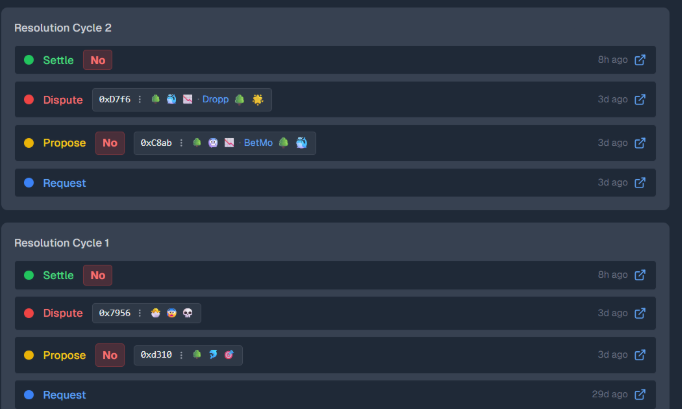
Polymarket argued that no public information, onchain evidence or credible reports confirmed the sale before the market closed. As a result, the platform maintained that information released after the deadline could not be used for resolution purposes.
Traders Argue Outcome Ignored Real-World Events
Many users disagreed with the decision, claiming the market should have been resolved based on when the Bitcoin sale actually happened rather than when it became publicly known.
The controversy was significant because more than $80 million had been wagered on the outcome. One trader reportedly claimed losses of approximately $500,000 following the final resolution.
Concerns Grow Over UMA Voting System
The case has renewed debate over Polymarket’s reliance on UMA’s token-weighted voting model. Under the system, users with larger UMA holdings have greater influence over market disputes.
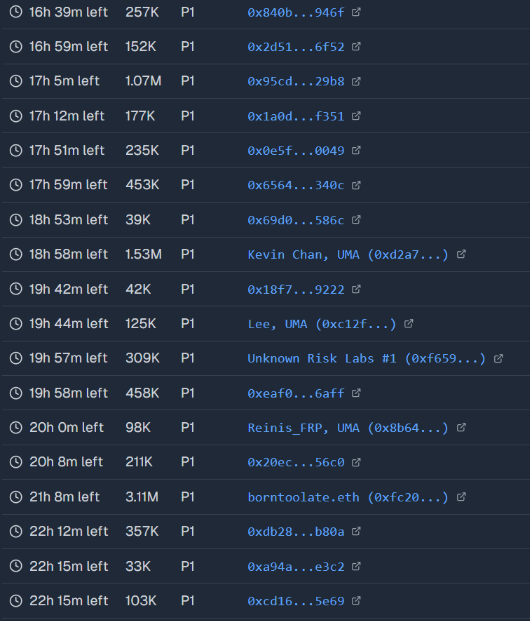
The largest vote in this case came from wallet borntoolate.eth, which controlled 3.11 million UMA tokens. Another major participant, a wallet identified as 0xd2a and linked to Kevin Chan, held 1.53 million UMA tokens.
Critics argue that large token holders can significantly influence outcomes while also earning rewards from dispute participation. Data showed borntoolate.eth earned more than $299,000 from voting on event disputes, while the Kevin Chan-linked wallet earned over $370,000.
Previous Disputes Add to Governance Concerns
Critics pointed to a prediction market involving a US-Ukraine minerals agreement that resolved as “Yes” after multiple dispute rounds, despite the deal being signed after the original deadline.
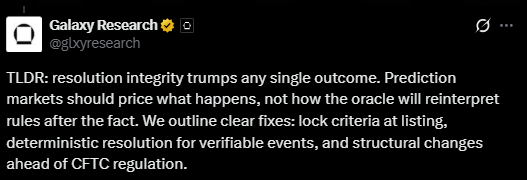
The debate comes as prediction markets face increasing regulatory attention, with US lawmakers recently calling for greater scrutiny of how these platforms operate and communicate with users.
Live market reaction
Disclaimer
This content is for informational purposes only and does not constitute financial, investment, or legal advice. Cryptocurrency trading involves risk and may result in financial loss.
Start trading
with BloFin today
Up to $500 sign-up bonus and zero-fee trading on your first 30 days.
Buy crypto nowⓘ You will be redirected to BloFin
About the author
Emerging voice in crypto journalism with a background in fintech and digital economics. Covers DeFi, NFTs, and the evolving regulatory landscape.
 Tristan R. ·
.jpeg&w=32&q=75) Laurisa ·
Laurisa ·